How To Help Your Child Love Reading (Without Pressure or Struggles)
- May 7
- 2 min read
Updated: 1 hour ago

Books should feel comforting — not stressful.
Many parents worry when a child doesn't immediately love books, sit still for stories, or seem interested in reading. But the truth is: a lifelong love of reading rarely begins with pressure, flashcards, or forcing "just one more page."
It begins with connection. ❤️
Make Reading Feel Cozy and Connected
Children associate reading with the feelings surrounding it. If books feel
warm, silly, comforting, and shared, children naturally begin to seek them
out again and again.
❤️ Read close together whenever possible
❤️ Use funny voices and expressions
❤️ Let your child interrupt, comment, and ask questions
❤️ Stop reading if they lose interest
❤️ Re-read favorite books often
❤️ Follow your child's interests — even if it's the same topic repeatedly
Turn Stories Into Play
Young children learn through movement, imagination, and hands-on experiences. One of the best ways to build reading engagement is to let
stories continue after the book ends.
🧸 Acting out favorite scenes
🧸 Retelling stories with toys or puppets
🧸 Drawing favorite characters
🧸 Creating simple scavenger hunts based on books
🧸 Asking playful prediction questions
🧸 Making up alternate endings together
Let Reading Grow Naturally
Reading development is not linear. Some children sit for stories early. Others prefer movement first. Some memorize books before decoding words. Some listen quietly for years before suddenly becoming enthusiastic readers. That's normal. Strong reader are built through:
⭐ Language-rich conversations
⭐ Curiosity
⭐ Emotional safety
⭐ Repetition
⭐ Play
⭐ Exposure to stories over time
🌼 Remember: Children don't need perfect reading routines. They need joyful experiences with language, stories, and connection. Small moments matter more than perfection.
😊 A child who laughs during stories, asks questions, pretends to read, or cuddles close during books is already building the foundation for lifelong literacy.
Watch Pip's Learning Video
🎈Pip's Lost Balloon Adventure
Children practice: emotional awareness, story sequencing, prediction skills, flexible thinking, and vocabulary building.
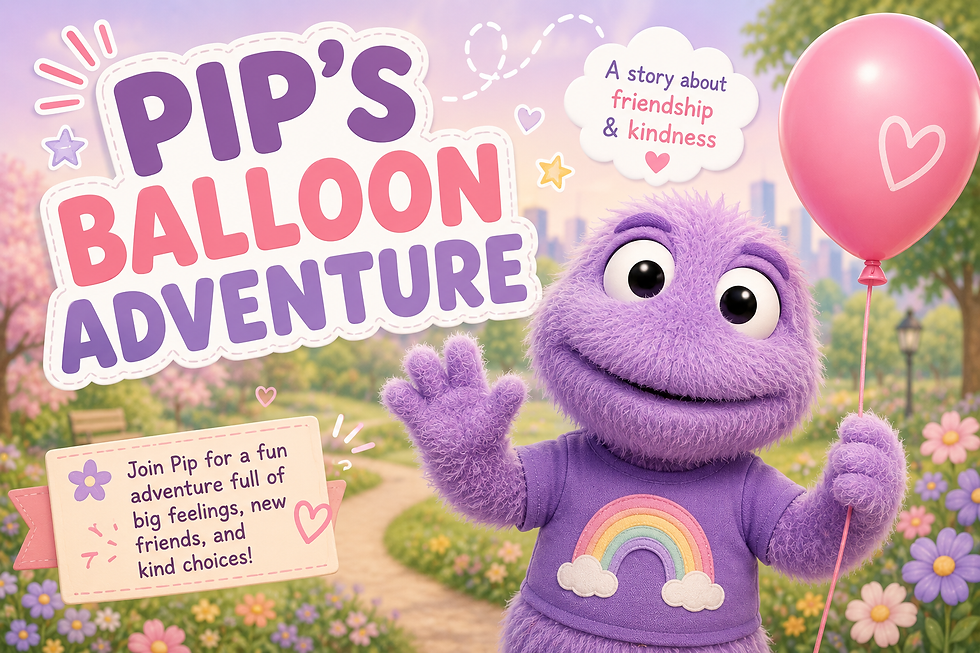

Try this with Pip's Balloon Adventure!
After watching Pip's story, ask:
How do you think Pip felt when the balloon floated away?
What would you have done?
Have you ever lost something important?
What helped Pip feel better?
Then extend the learning through play:
Draw and color your own balloon
Hide paper balloons around the house
Make up a new ending together
Create a feelings chart for Pip


Comments